Problemi con la spalla post lussazione: aiuta la TERAPIA MANUALE
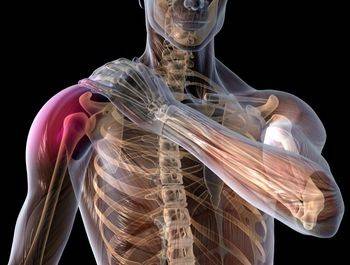 The patient should make a visit to the orthopedist for a check-up within a few days of the trauma.
The doctor may change medications to relieve pain, he must also check if the position of the joint has been maintained.
The specialist should re-examine the injuries to other structures damaged by the trauma.
After a period of immobilization (usually a couple of weeks), slowly and gradually, the physiotherapist performs a cycle of sessions passive mobilization (terapia manuale)to increase the range of motion (ROM) shoulder.
This helps to preserve natural movement and decrease the risk of recurrent dislocation.
When good progress is achieved in range of motion, you have to start a exercises reinforcement to help the patient to return to normal daily life.
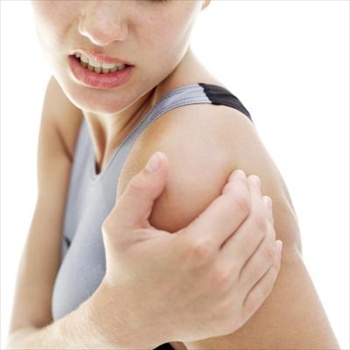
Once the dislocation heals and recovers the movement of the shoulder, continue your exercise program. It is crucial to continue with daily reinforcement of the shoulder muscles it takes to prevent a recurrence of dislocation.
The muscles that stabilize the humerus in the glenoid humeral are those of the rotator cuff: supraspinatus, infraspinatus, teres minor and subscapularis.
The reinforcement must be focused on these muscles, but it must not trascuare vertical stabilizers, ie biceps, triceps and deltoid.
They recommend internal and external rotation of the shoulder exercises with elastics, in addition to flexion and extension of the arm lying with weights or an anklet.
Physical therapists of FISIOMASSAGE STUDIO can help you plan an appropriate program of exercises to be performed regularly.
www.fisioterapiaamilano.it